Why is it important to receive orthodontic care from an orthodontist rather than a dentist?
Invisalign/Braces:
Many people wonder: dentists vs. orthodontists. Nowadays, many dentists offer orthodontics services. This shift has been magnified with the introduction of Invisalign. Dentists are offering Invisalign or braces with minimal formal orthodontic training. Unfortunately most dentists have limited knowledge and experience in the biology and movement of teeth; most only take a few weekend courses on tooth movement. Since Invisalign software can create an automatic treatment plan, dentists do not have to know or understand how their patient’s teeth are moving during treatment.
Additionally, because Invisalign prefers that dentists only treat simple cases, they are generally limited to one product line and a limited number of aligners used. Alternatively, orthodontists have unlimited access to Invisalign’s product line, number of aligners, and treatment design capabilities. Orthodontists have a comprehensive education in biomechanics of moving teeth and can create customized treatment plans. They are qualified to treat every level of case, offering safer and more effective Invisalign treatment. Dr. Woo does not use automated treatment plans to align teeth; he customizes each step of every aligner. You get the best treatment outcome specific to your needs. Afterall, there is no substitution or shortcuts for excellence.
Education:
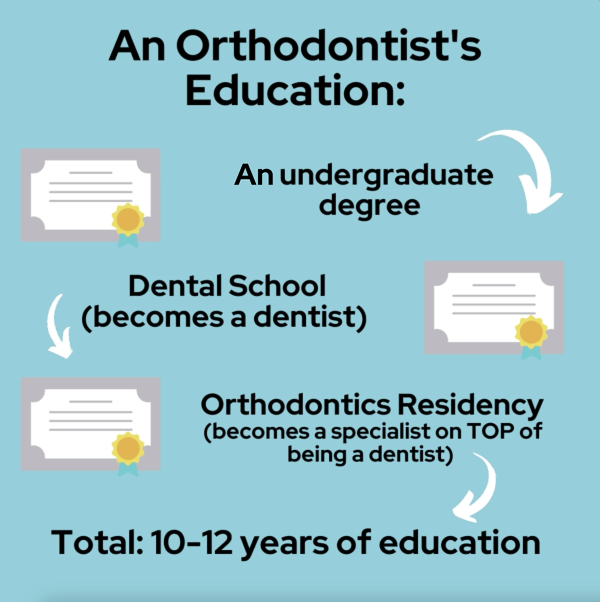
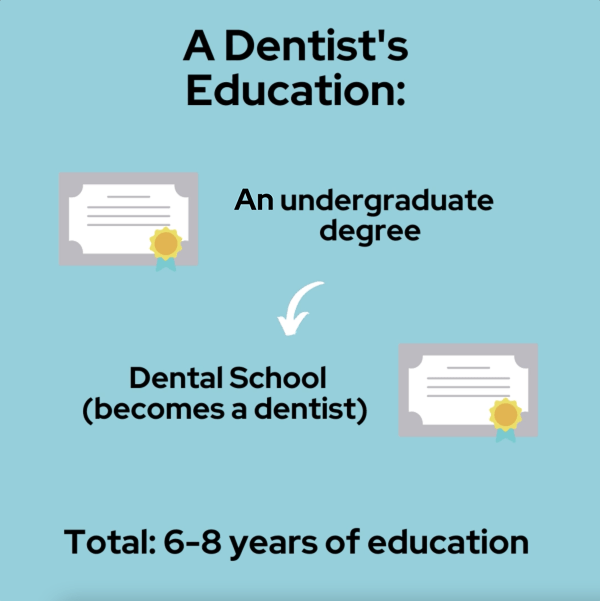
It is important to understand that dentists do not receive the same level of training as orthodontists. Both orthodontists and dentists attend dental school, but orthodontists become specialty doctors by attending 2-3 years of orthodontic school. Dentists are trained to do fillings, crowns, and teeth cleanings. They are experts in this area – it’s what they do every day. In contrast, orthodontists focus on moving teeth. They straighten teeth daily, remain up-to-date on the latest industry practices, and often participate in continuing education classes specifically for tooth movement. Most importantly, an orthodontist understands the long-term process of aligning teeth and can visualize what should be happening at various stages of treatment. If you had a heart issue, would you prefer to be seen by your general physician or a cardiologist? Choosing between a dentist and an orthodontist for orthodontics is a similar decision. Both can give you advice and treatment but an orthodontist is a safer investment because you are paying for their depth of knowledge, better treatment outcome, and consistent results. Dr. Woo graduated from the top ranked UCSF School of Dentistry and holds a degree in orthodontics and a masters in oral biology. For a comprehensive list of Dr. Woo’s education, please click HERE.
Experience:
Experience matters! Dr. Woo has treated over 10,000 patients and has over 60,000 hours of orthodontic experience. It is important to know how to align teeth before trying to master a new technology such as Invisalign. This pays dividends in the results as well as long term heath and stability of the outcome. Most dentists do not have enough experience in orthodontics to be experts at it, nor do they have the educational background to understand how to do it properly. Most dentists receive their guidance with Invisalign by the sales representative who is promoting the product. So dentists vs. orthodontists? Choose an orthodontist for perfect teeth alignment.